How Varnan Helped Git City Reach 19,000 New Signups in 48 Hours
Fri, Mar 6, 2026 · 10 min read
TL;DR
- Client: Git City, a 3D interactive city where every GitHub developer is a building
- Challenge: A genuinely novel visual project with no distribution strategy and a flat growth curve at 211 signups per day
- What Happened: Varnan found Git City during product research, then spent a week studying its audience, share triggers, positioning, and distribution before publishing a 33-second hero asset.
- Results: 55x growth in daily signups, 19,000+ new developers joined in 48 hours, 828K views, 51K likes, 97K interactions, 47,749 weekly visitors, 173,004 page views
- Then: The positioning gave other creators a clear story to adapt, extending the campaign across X and Instagram
The Product: Git City
Git City is built by Samuel Rizzon. The concept is simple but the execution is something else. Every GitHub profile becomes a unique 3D pixel art building in an interactive city. Your contributions decide how tall your building is. Your repos decide how wide the base is. Lit windows show whether you've been active recently.
You can fly through the entire city in flight mode and find any developer just by searching their username. You can compare two developers side by side, unlock achievements, customize your building with items from the shop, and download your profile as a shareable card.

The tech behind it is solid. Git City runs on Next.js 16, uses Three.js via react-three-fiber for the 3D rendering, Supabase for auth and the database, Stripe for payments, and is deployed on Vercel. Buildings use instanced meshes and a LOD system so the city stays performant even with thousands of developers loaded in.
The core appeal is that it turns something abstract, your GitHub contribution history, into something you can actually see, explore and share. That's what made it worth talking about.
The Challenge: A Great Product That Wasn't Moving
When Varnan's team found Git City, the project was doing around 211 signups per day. The number looked healthy in isolation, but the growth curve had stayed flat.
The problem wasn't the product. The product was genuinely compelling and anyone who spent 30 seconds looking at it could see that. The problem was that most developers had never heard of it, and the ones who had stumbled on it had no obvious reason to share it further. Technical audiences tend to star something and move on.
There were three things working against it:
1. You Had to See It to Get It
Git City is a visual product. Reading a description of it doesn't land the same way as seeing a city full of glowing buildings where each one is a real GitHub account. Text posts, tweet threads, and GitHub README stars weren't going to do the job here. The project needed to be shown, not explained.
2. No Distribution Engine
Samuel had built the product and shipped it. But there was no content strategy, no creator partnerships, and no repeatable way to get it in front of new audiences. It was mostly relying on organic discovery, which in a sea of developer tools is a slow process.
3. The Cold-Start Loop
Without visibility, signups stayed low. Without signups, the city had fewer buildings and was less impressive to explore. Without an impressive city to explore, there was less reason to share it. Git City was stuck in that loop.
The Week Behind the Growth Campaign
Git City surfaced during Varnan's product research. The team saw a strong visual product with a clear identity hook, then spent a week studying how to turn those strengths into distribution.
The work started with a product teardown. Varnan mapped the parts of Git City that mattered to different developer ICPs: open-source contributors could see their work become a skyline, portfolio-conscious engineers could share a visual identity, and developer creators had a concept their audiences could understand without a tutorial.
The team reviewed comparable launches and creator coverage, then reduced the positioning to one repeatable idea: every GitHub developer has a building, and their work shapes it. That sentence guided the script, the footage, and the creator flywheel Varnan wanted the first post to start.
The 33-second Instagram Reel became the campaign's hero asset. It showed the city, connected a building to a real GitHub username, and let the visual proof carry the message. Every choice supported the plan: clarity without sound, a hook developers could personalize, and a framing other creators could reuse in their own words.
The Results: 48 Hours That Changed the Trajectory
The numbers from the next 48 hours are worth laying out clearly because they're not subtle.
Daily Signups
- Before: 211 signups per day
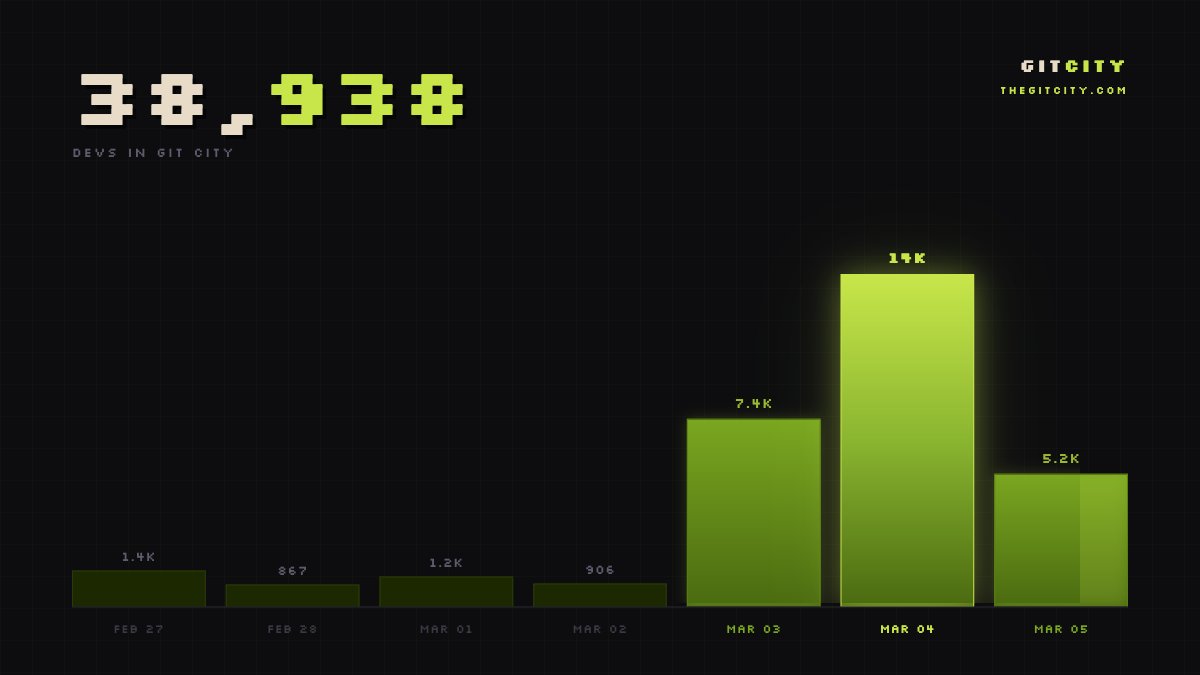
- Day 1 after the Reel: 7,415
- Day 2: 11,703
- Growth: 55x
Reel Performance
- 828,000 views
- 51,000 likes
- 97,000 interactions
- 19,000+ new developers joined the platform
Site Analytics (7-day window)
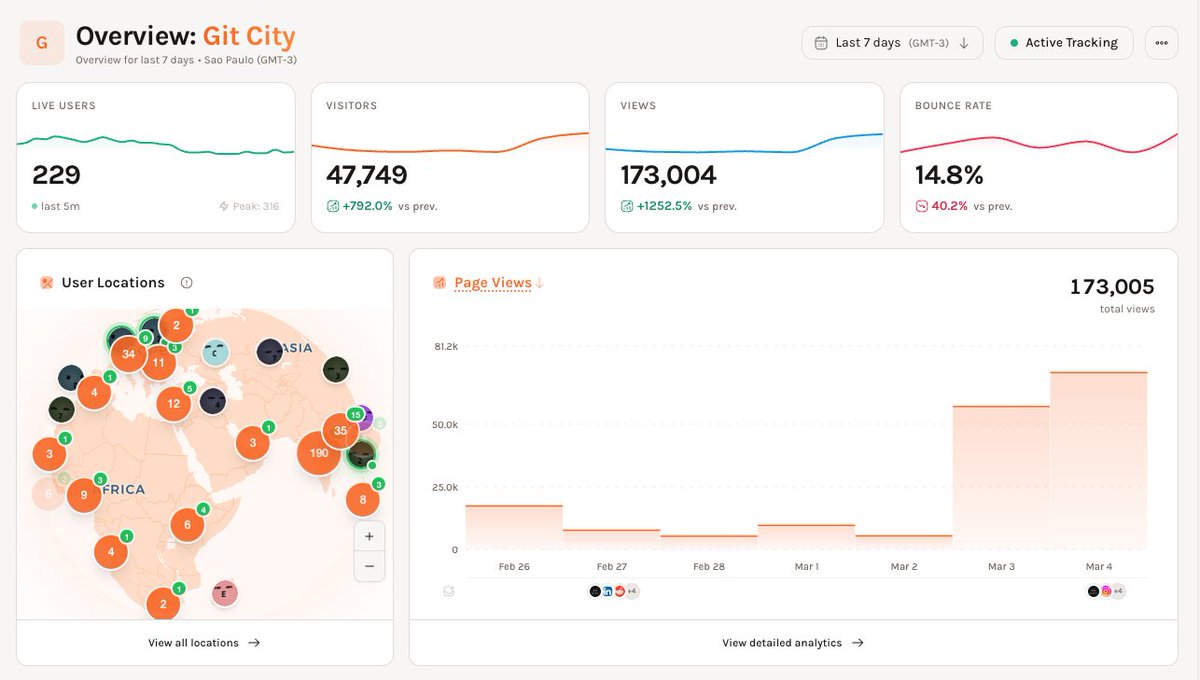
- 47,749 weekly visitors (+792% vs the previous period)
- 173,004 page views (+1,252.5% vs the previous period)
- 14.8% bounce rate, which is remarkably low and means people who landed on the site were genuinely exploring it
The Chain Effect: Other Creators Kept It Going
Varnan designed the original content to give the campaign more than one distribution path. The first post reached the core audience, while the clear positioning and reusable visuals gave other creators material they could adapt.
Once the original Reel gained traction, other creators started picking it up independently on X (Twitter). One developer with a large following posted about Git City describing the concept in plain language with a short clip of the city. That post alone crossed 128K views.
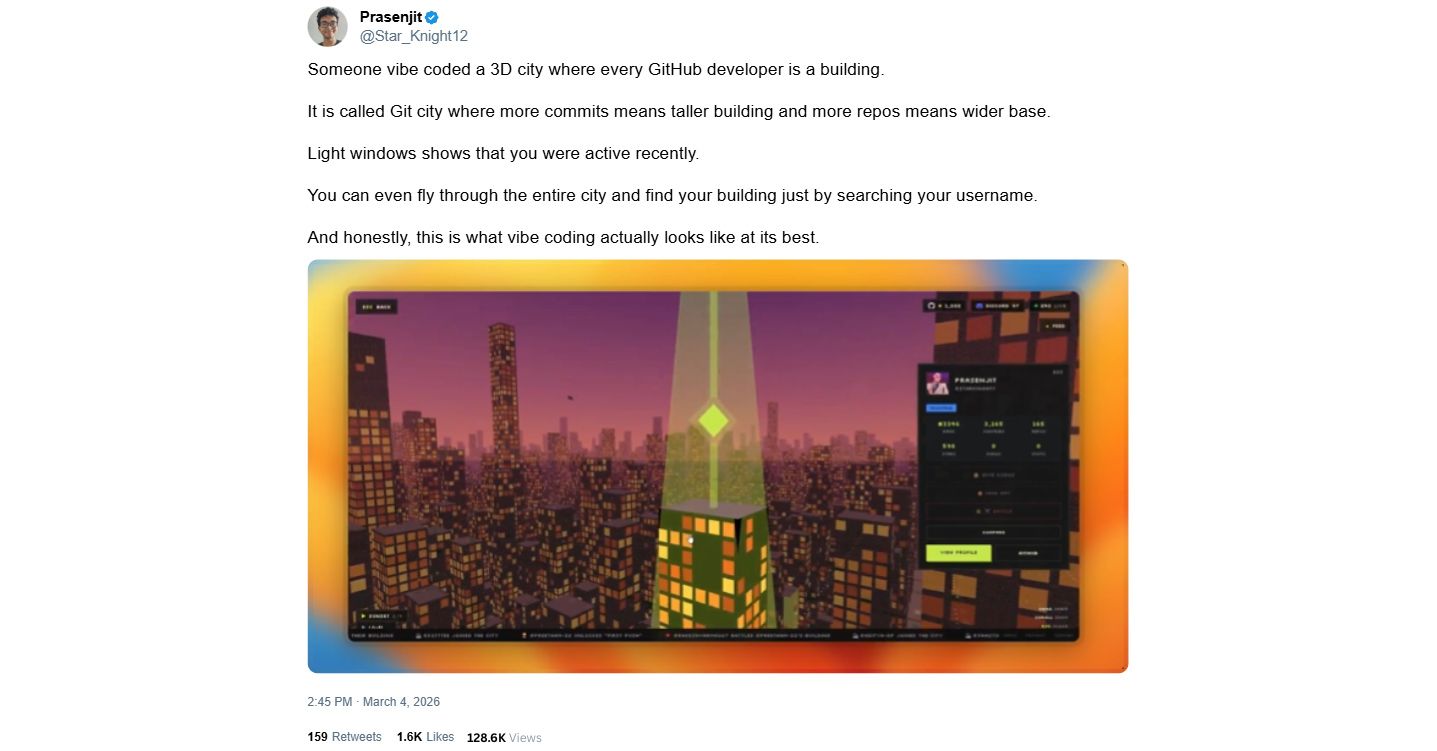
Another creator posted a video of the full city skyline, noting that you could even place ads in the city. That one crossed 190K views and pulled its own wave of engagement and replies.

Those creators independently adapted the campaign's core story. Varnan's framing made Git City easy to explain, and the product supplied visual proof that worked in short clips. Each new post reached another audience while keeping the positioning intact. The Git City GitHub repo sits at 2.3k stars and 111 forks after the campaign.
The page view chart from Feb 26 through Mar 4 shows the steepest growth happening at the end of the window, which means the chain effect was still building rather than tapering off.
The Founder's Response
Samuel posted publicly about what happened:
Two weeks ago, Git City had 211 signups in a day. Yesterday: 7,415. Today: 11,703. [...] 828K views. 51K likes. 97K interactions. 19,000+ new developers joined in 48 hours. Paras, Varnan: you changed the trajectory of this project overnight. Thank you.
- Samuel Rizzon, Creator of Git City
Samuel's numbers show the shift in daily acquisition: 211 signups before the campaign, followed by 7,415 and 11,703 on consecutive days.
Why It Worked
Git City worked because Varnan matched the product, audience, message, and format before production began. The team identified the developer groups most likely to care, studied how similar products earned attention, and built the campaign around Git City's strongest visual and identity hooks.
The Reel gave developers a fast way to understand the product and picture their own building. It also gave creators a complete story they could retell: your GitHub work becomes a city, your contributions shape the building, and you can explore the result. That portable framing helped the campaign move beyond the first post.
There's also something worth pointing out about the 14.8% bounce rate. When a traffic spike comes from poorly matched audiences, you see bounce rates above 70%. When it comes from people who actually wanted to find this product, they stay and explore. That's what happened here. The Reel didn't just drive volume. It drove the right people.
Frequently Asked Questions
What happened before the campaign went live?+
Varnan spent a week studying Git City, its developer audiences, comparable launches, and the reasons people would share it. The team mapped the ICPs, refined the positioning, planned the content sequence, and designed a creator flywheel around a story that could travel across platforms.
How was the 33-second campaign engineered?+
The team built the content around the way developers understand Git City. The opening introduced the personal hook, the middle connected a real GitHub username to a building, and the close gave viewers a reason to explore their own profile. The video worked without sound and gave creators a narrative they could repeat without a brief.
What made other creators adapt the campaign?+
The campaign gave creators a simple narrative, strong visual proof, and a personal hook for developer audiences. They could explain Git City in one sentence, show it in a short clip, and add their own angle. That made the product easy to cover, so each new post carried the campaign into another audience.
The bounce rate was 14.8%. What does that mean in practice?+
It means that out of the 47,749 visitors who landed on Git City's site during that 7-day window, over 85% didn't immediately leave. They explored. A typical traffic spike from poorly targeted content produces bounce rates of 60 to 80 percent. 14.8% tells you the Reel reached people who were actually interested in the product, not just anyone scrolling by.
Does this kind of result happen with every project Varnan works with?+
The numbers vary by product, market, audience size, and how quickly the idea becomes clear. Varnan applies the same process across campaigns: product research, ICP mapping, positioning, content engineering, distribution, and measurement. Git City is a strong example because the product is visual and personal, but the process also works across other open-source projects. You can read those case studies here.
Three High-Impact Moves in 15 Days
The result came from a connected system: product research, audience mapping, positioning, content engineering, and distribution. Varnan Ignition packages that process into a fixed 15-day sprint, so you can evaluate the work before committing to anything longer.
Here's what's inside:
- Media on a 250K network. Your product placed in front of an organic audience of 250,000 through content built for it.
- A taste of Reddit marketing. Strategic placement in the communities your users already sit in, with a credible presence rather than a drive-by post.
- 5 design partners. Sourced from our founder and operator network, so you get structured feedback from people who have built and shipped.
The shape is simple: apply, a 45-minute onboarding call, 14 days of execution, then results in your hands. 15 days, $2,000, and you keep everything we build. No commitment past the sprint.
Are you a Good Fit?
We don't work with everyone. We work best with founders who have a product, traction, and are ready to accelerate growth.
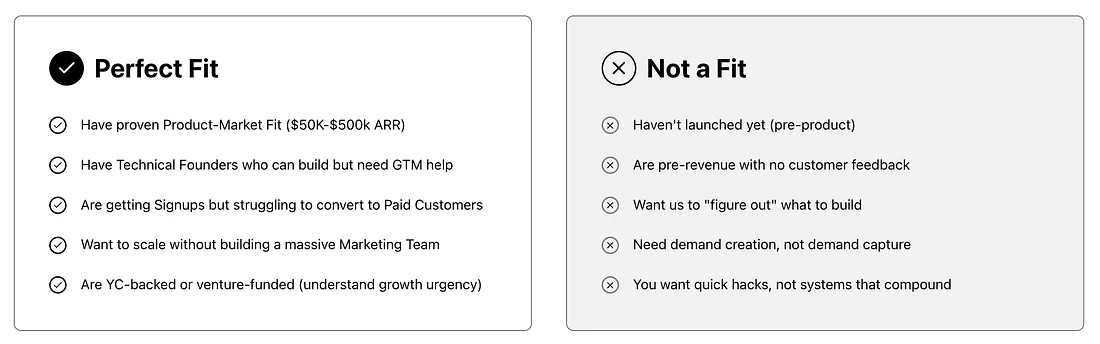
If you've built something worth discovering, Varnan will help the right people find it.
Book a strategy session
Varnan will analyze your product positioning, identify your target audience, and outline a 90-day plan tied to measurable results. Book a strategy session.